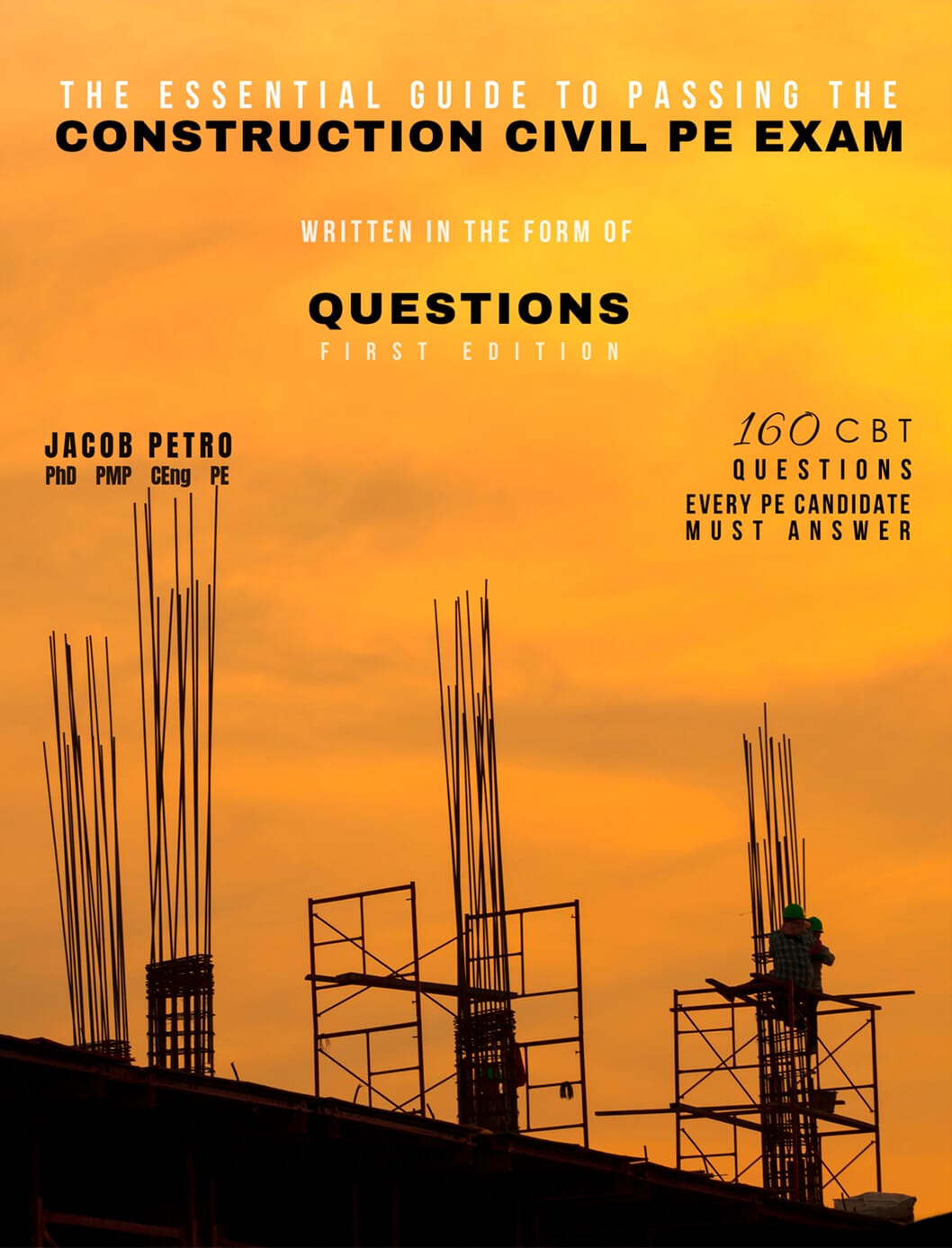
The main objective of this book is to provide a comprehensive and thorough coverage of the Construction Engineering Civil PE Exam topics with the use of questions. This book is written in accordance with the latest NCEES Exam specifications and design standards, with the use of structured and well-thought-out questions. Questions that serve as an overall guide to help the reader understand and remember all the knowledge areas presented in the exam specifications, along with key topics and important concepts of Construction Engineering.
This book features 160 comprehensive Construction Civil PE Exam questions to help you pass the exam on your first try. Each question is educational and designed to cover a wide range of topics, with no straightforward answers. Almost everyone who has purchased this book, studied thoroughly, and taken the exam reports that it made passing significantly easier. The questions are organized into seven parts:
- Project Planning – Covers topics related to cost estimating and scheduling, including economic analysis methods like present worth and lifecycle cost, relevant to the Estimating Quantities and Costs, and Project Planning and Scheduling knowledge areas for the exam.
- Soil Mechanics – Contains questions on lateral earth pressure, consolidation and settlements, effective stress versus total stress, bearing capacity, and slope stability, all essential to the knowledge area.
- Material Properties & Quality – Discusses properties of soil, rock, and aggregates, concrete mix design, admixtures, and wood properties. It includes material testing and production topics such as concrete placement and compaction, soil density, various embankments, changes in properties during hauling operations, and welding and weld symbols.
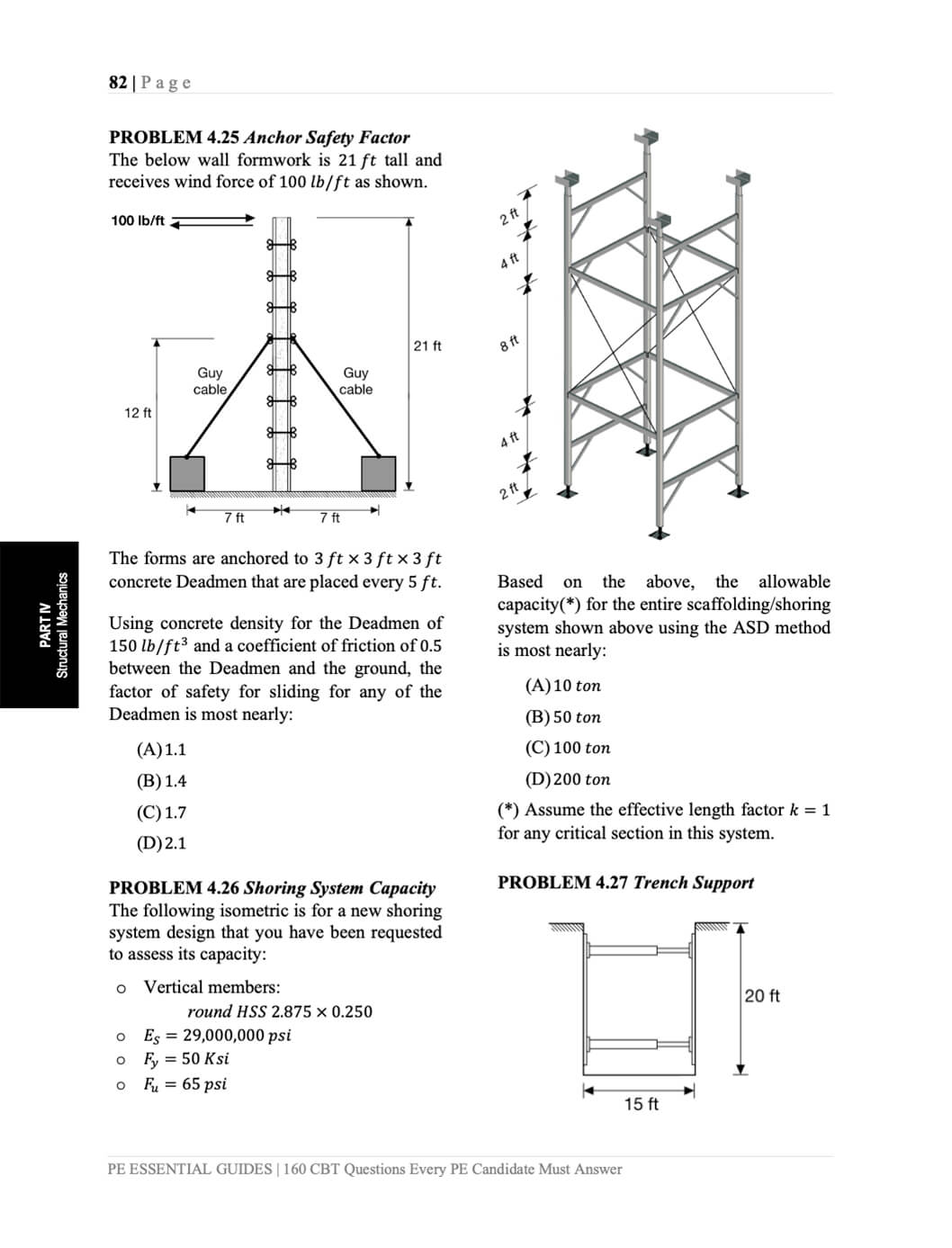
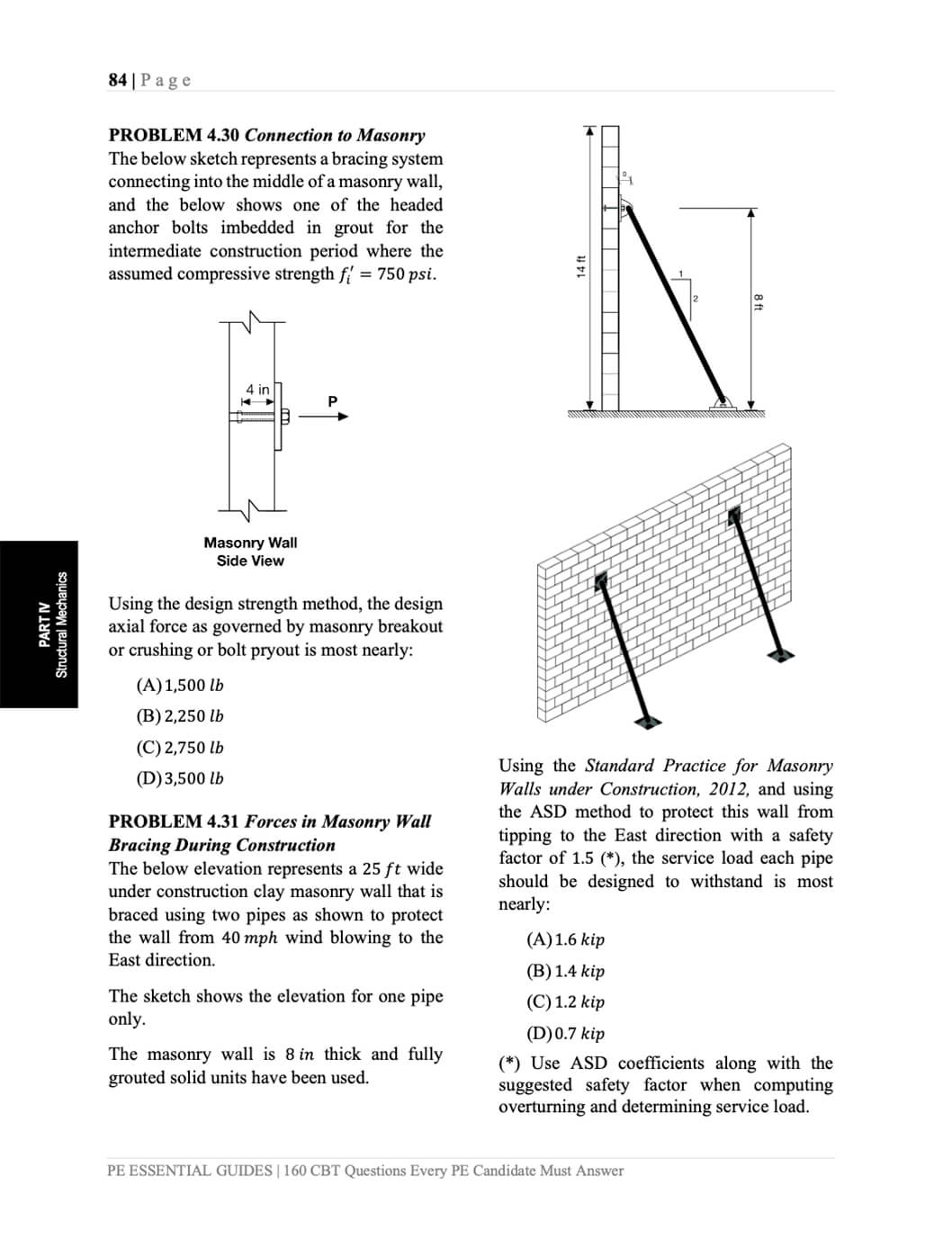
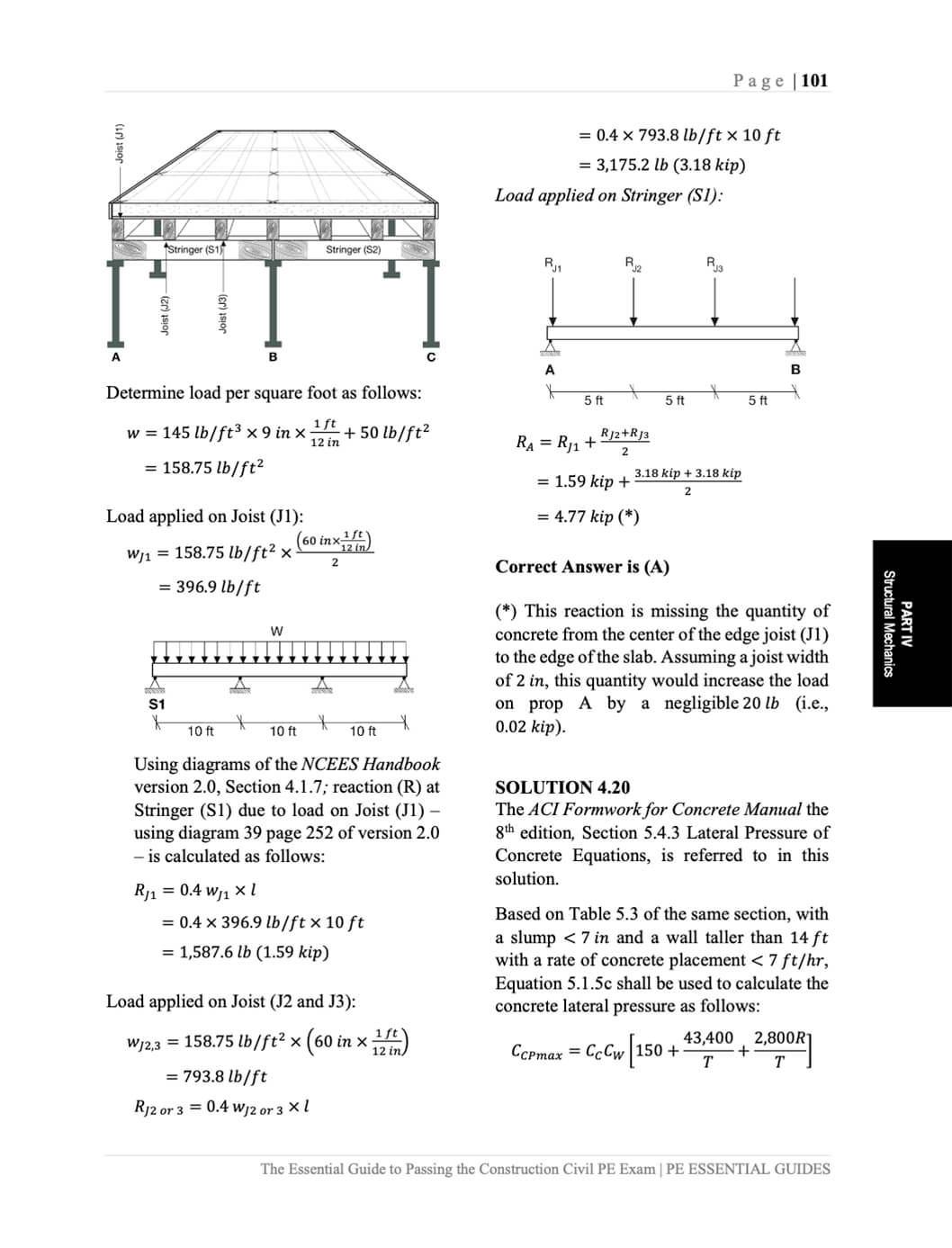
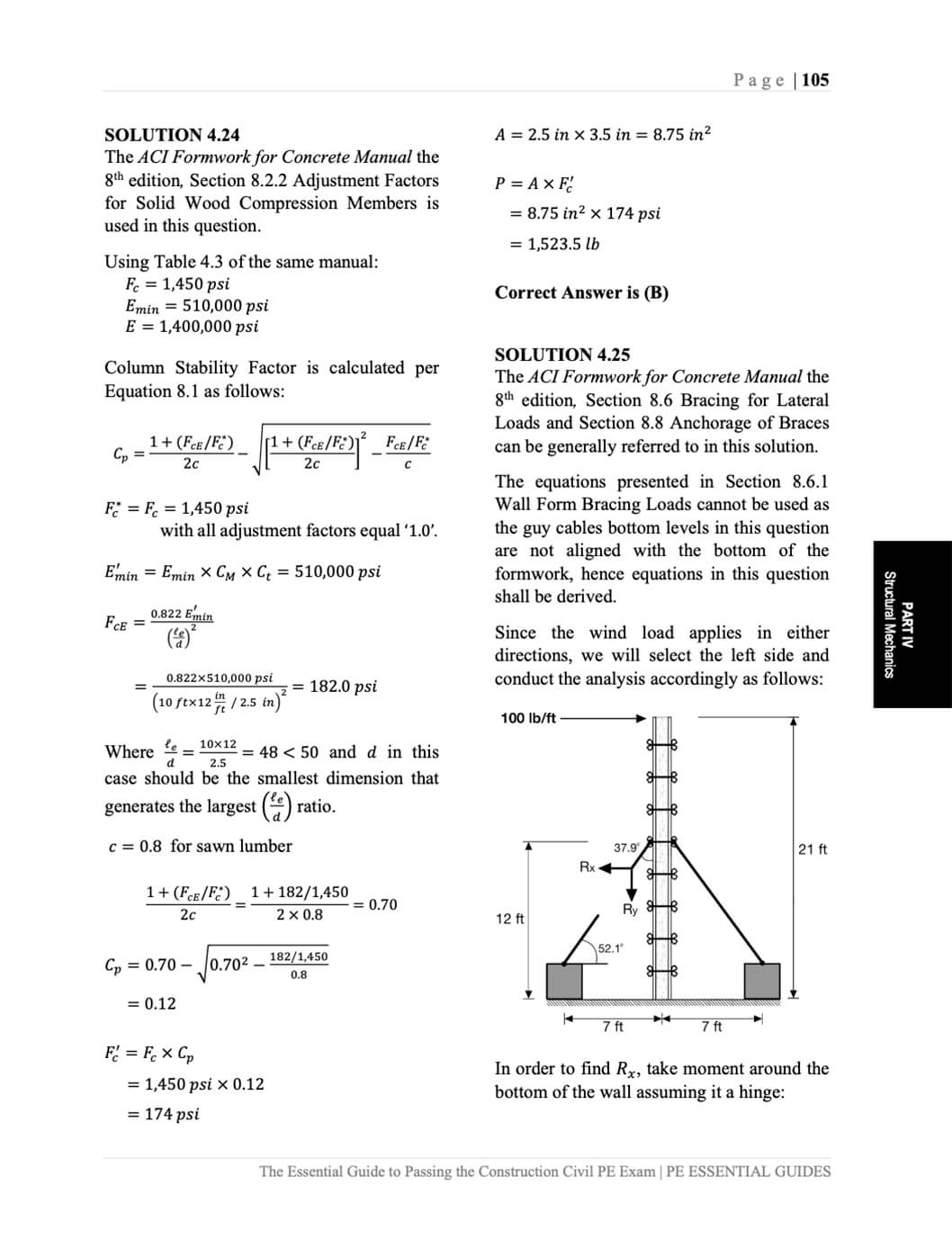
- Structural Mechanics – Covers a broad range of topics, including deflection, determinate structures, stability analysis, 2D and 3D trusses, and load considerations. It discusses cross-section behavior under axial loading, bending, shear, torsion, and combined loading conditions, along with formwork design, scaffolding, shoring, reshoring, bracing, anchorage, and construction loads for both permanent and temporary structures.
- Site Layout & Safety – Addresses horizontal and vertical curves, staking, benchmarking, survey methods, excavation safety, general safety practices, and OSHA regulations. It also includes questions related to temporary works for roads, site work, work zones, and public safety.
- Hydraulics & Hydrology – Focuses on the analysis and design for storm events, runoff analysis methods, rainfall intensity, pond design, sheet flow analysis, hydrographs, rainfall gauging stations, and considerations for soil loss and erosion.
- Construction Operations – Covers a variety of construction operations, including lifting and rigging, deep excavations and dewatering, mass haul diagram theory, crane stability and selection, excavation calculations, borrow pit volume calculations, and the design and construction of deep wells and deep piles.
All answers are detailed and well-referenced, linking to the relevant design manuals and codes for your benefit.